Corrosive process conditions destroy standard piping hardware faster than most maintenance budgets can absorb. Hastelloy Industrial Flanges solve this by pairing nickel with molybdenum and chromium in a single alloy structure that resists pitting, crevice attack and stress corrosion cracking. Chemical plants, refineries, and marine facilities rely on these connections to keep piping systems leak-proof under sustained exposure to acids and chlorides. One flange failure can idle an entire process line for days.
What Are Hastelloy Flanges?
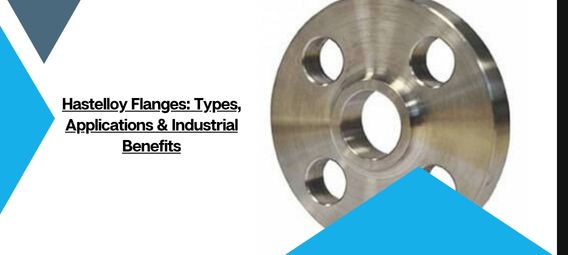
Hastelloy Pipe Flanges are mechanical connectors machined from nickel-molybdenum-chromium alloys, designed to join pipe sections, valves and vessels without welding the entire joint. The alloy composition gives these flanges their defining trait: an oxide passive layer that self-repairs when scratched or abraded, unlike stainless steel, which pits once its chromium oxide film breaks down in chloride-rich media.
Two grades dominate industrial specification sheets. Hastelloy C276 Flanges handle wet chlorine, sulfuric acid, and mixed acid environments where stainless steel corrodes within months. Hastelloy C22 Flanges add tungsten to the mix, improving resistance to oxidizing and reducing chemicals in the same piping run. Neo Impex supplies both grades machined to ASME B16.5 dimensional standards. Hastelloy Industrial Flanges built to these specifications outperform conventional nickel alloy flanges in mixed-acid, high-chloride process lines where premature failure carries the highest cost.
Major Types of Hastelloy Flanges
Six flange designs cover nearly every joint configuration found in corrosive and high-pressure piping networks across industrial process plants.
Weld Neck Flanges
A long tapered hub transfers stress gradually into the pipe wall, reducing fatigue at the weld joint. This design suits high-pressure steam lines and cyclic-load process piping above 600 PSI. Critical reactor feed lines specify weld neck construction for its full penetration weld integrity.
Slip-On Flanges
The pipe slides through the flange bore before fillet welding on both sides, cutting fabrication time compared to weld neck alternatives. Installation crews favor slip-on designs for low-pressure utility lines below 300 PSI. Material costs run 10 to 15 percent lower than equivalent weld neck flanges.
Blind Flanges
Hastelloy Blind Flanges seal pipe ends, vessel openings, and valve outlets where no further pipe continues. Pressure testing crews bolt blind flanges onto isolated sections for weld integrity checks before commissioning. They also serve as future connection points on process lines for planned expansions.
Socket Weld Flanges
The pipe end is inserted in a recessed socket and secured by a single fillet weld. This configuration is suitable for small bore piping, usually 2 inches and under, in high-pressure instrumentation and hydraulic service lines. A smooth internal bore reduces turbulence in fast-flowing corrosive fluids.
Threaded Flanges
Threaded connections eliminate on-site welding entirely, letting maintenance crews disconnect piping without hot work permits. Refineries use threaded flanges in low-pressure service under 150 PSI where welding poses fire risk. Removal and reinstallation take under an hour with standard tooling.
Lap Joint Flanges
A separate stub end absorbs process contact while the backing flange rotates freely around it, simplifying alignment during dismantling. Plants that dismantle piping for inspection every 12 to 18 months prefer this design. Reusing the backing flange across multiple stub ends cuts long-term material spend significantly.
Industrial Applications of Hastelloy Flanges
Hastelloy Flange Applications span industries where standard alloys fail within a single operating cycle under aggressive chemical or thermal load.
Chemical Processing Plants
Sulfuric acid concentration units and chlor-alkali reactors depend on these flanges for chloride-containing streams. Corrosion rates below 0.002 inches per year extend service intervals beyond five years in continuous acid duty.
Oil & Gas Industry
Offshore platforms use these flanges in sour gas service containing hydrogen sulfide and carbon dioxide. Refining units specify them for hydrofluoric acid alkylation piping exposed to constant chemical attack.
Power Generation Facilities
Flue gas desulfurization systems handle hot, acidic slurry that destroys carbon steel within a year. High-temperature fluid loops in supercritical boiler circuits maintain integrity above 500°C continuous service.
Marine and Offshore Systems
Saltwater ballast and cooling systems resist chloride pitting that typically compromises 316 stainless within 18 months of continuous seawater exposure. Splash-zone piping retains dimensional stability under cyclic wetting.
Pharmaceutical Industry
High-purity process systems avoid metal ion leaching that could contaminate active pharmaceutical ingredients during synthesis. Cleaning-in-place cycles using aggressive sanitizing agents leave no measurable surface degradation.
Pulp and Paper Industry
Chemical recovery boilers process green liquor and white liquor streams containing sulfide compounds. Digester piping withstands continuous exposure to hot alkaline cooking liquors without scaling.
Benefits of Using Hastelloy Flanges
Plants switching from stainless steel to these flanges report measurable gains across maintenance budgets, safety records, and process uptime.
- These flanges reduce maintenance costs by extending inspection intervals well beyond typical stainless steel replacement cycles.
- Equipment lifespan increases substantially since the passive oxide layer resists the pitting that shortens conventional flange service life.
- Operational safety improves because leak-free joints prevent uncontrolled release of hazardous acids and process chemicals under pressure.
- System reliability strengthens across pressure cycling and thermal shock, conditions that crack lesser alloys within a few operating seasons.
- Downtime is greatly reduced when flanges outlast planned turnaround schedules, rather than causing unplanned shutdowns for replacement.
- Performance in harsh environments remains constant even where chloride concentration or acid strength varies in a single production run.
- Neo Impex has these grades in stock and ready for dispatch to process plants in a wide array of industrial sectors.
Conclusion
Hastelloy Industrial Flanges provide corrosion resistance and mechanical strength that are not offered by conventional alloys in chloride-containing, high-temperature or acid pipe systems. Both the weld neck and blind flange designs are suitable depending on the pressure rating and the need for maintenance access. For technical datasheets and up-to-date availability, contact Neo Impex for grade-specific technical datasheets.