Carbon steel is an iron-carbon alloy, which the composition of carbon is higher than that of stainless steel has lower melting point. Again both appear to be the same at first glance, and yet there is a significant difference between carbon steel and stainless steel in terms of this carbon: it eats up more alloying elements, and in getting its way, alters the characteristics of the metal in terms of its strength and durability.
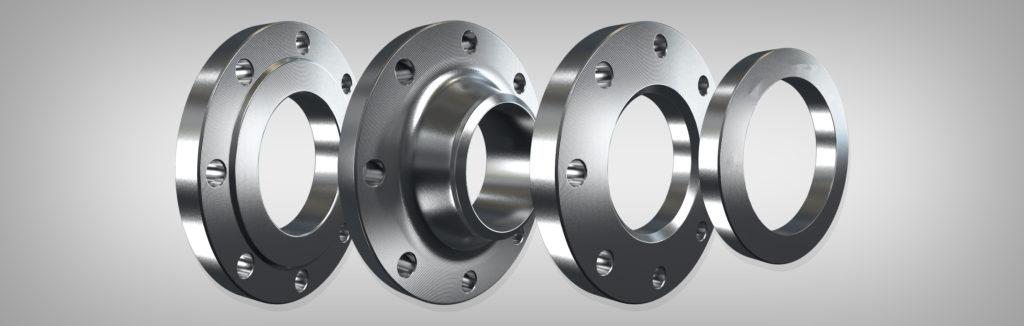
Carbon Steel ASTM A105 Flanges have wide application in hardware, engineering, construction industries and widely used in Telecommunication industry, Transport industry, Chemical industry, Petroleum industry etc.
Even though products like Stainless Steel 304 Flanges are of the same type of steel – the base for most steels is iron with carbon – they are produced using the two steps. Stainless steel contains certain amount of chromium and nickel to increase its resistance; hence it is suitable for particular purposes.
Difference between Carbon steel flanges and Stainless steel flanges:
Forgings produced in grades A-105 are the first most common materials used to manufacture Pipe Flanges. For applications requiring lower temperatures, the A-350 LF2 material grades, while the A-694 Grades, F42-F70, are designed for high yields. Because of the increased strength of carbon steel flanges, high yield material is widely employed for pipeline service.
In addition to having more Chromium and Molybdenum than carbon steel flanges, alloy steel flanges are designed to withstand high temperature and high pressure environments. Because of the increased Chromium content, they have a stronger corrosion protection than conventional Carbon Steel flange.
In Flange manufacturing, Nickel, Chromium, and Molybdenum-containing stainless steel is the second most commonly used forge material. The most common ASTM A182-F304 / F304L and A182-F316 / F316L forgings are found in the A182-F300/F400 series. During melting, trace elements can be added based on the service needs of these Forgings classes. Aside from this, the 300 Series is not magnetic, whereas the 400 Series exhibits magnetic properties and is less corrosion resistant.